- Home
-
Shop By Brand
Shop By Top Brands
View All Brands -
Interior
Interior
Browse All Interior Featured Category
Interior
-
Exterior
Exterior
Browse All Exterior Featured Category
Exterior
-
Paint Care
 Featured Category
Paint Care
- Detailing & Accessorie
- Pages





Ceramic Coating Maintenance Guide for Indian Cars
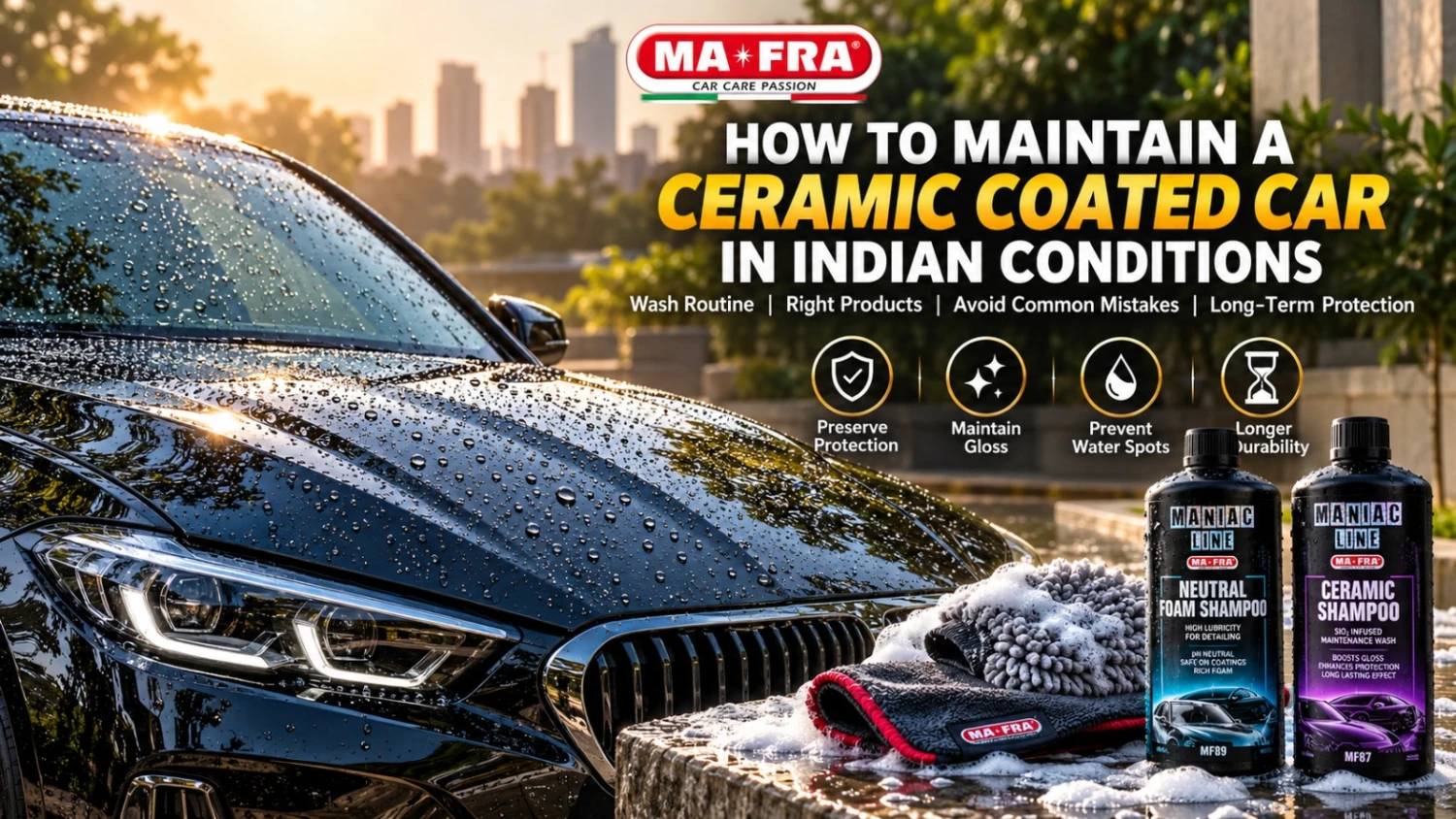
How to Maintain a Ceramic Coated Car in Indian Conditions
Getting ceramic coating applied is only the
beginning.
The way you wash and maintain the car
afterward plays an important role in how the protected surface looks and
performs.
Dust, hard water, rain, road grime, bird
droppings and regular washing can all affect the condition of a vehicle.
Indian driving conditions make maintenance
especially important.
The good news is that ceramic coating
maintenance does not need to be complicated.
You mainly need a proper wash routine,
suitable car-care products and a habit of dealing with contamination before it
becomes difficult to remove.
What Does Ceramic Coating Maintenance Mean?
Ceramic coating maintenance means keeping
the coated surface clean without unnecessarily interfering with the protection
already applied.
·
Regular washing
·
Safe drying
·
Removing contamination when needed
·
Managing water spots
·
Using compatible maintenance
products
·
Checking how the coating is
behaving over time
It does not mean applying a strong chemical
or another coating every time the vehicle is washed.
Does a Ceramic Coated Car Still Need Washing?
Yes. Ceramic coating does not make a car
maintenance-free.
Dust, mud, road film, insects, bird
droppings, mineral deposits and other contamination can still settle on the
vehicle.
Regular cleaning lets you see how the
surface is performing.
What Makes Ceramic Coating Maintenance Different in India?
·
Heavy road dust
·
Hard-water washing
·
Strong sunlight
·
High panel temperatures
·
Monsoon dirt
·
Mud and road film
·
Bird droppings
·
Traffic pollution
·
Construction dust
·
Frequent washing
The best maintenance routine is not simply
about washing as often as possible. It is about washing correctly when the car
needs it.
How Often Should You Wash a Ceramic Coated Car?
There is no single schedule that works for
every vehicle.
A car parked outside every day will usually
need more attention than a vehicle stored indoors. A car used daily on dusty
roads will also become dirty faster.
Instead of following an arbitrary number of
days, look at the vehicle and wash it when visible dust, road grime or
contamination begins building up.
Start With a Safe Pre-Wash
If the vehicle carries heavy loose dirt,
removing as much contamination as possible before touching the paint is useful.
A pre-wash or foam stage can help loosen
contamination before contact washing. Rinse away loose dirt first.
The purpose of the pre-wash is to make the
following wash stage safer and easier.
Use a Suitable Maintenance Shampoo
Product selection matters on a protected
vehicle.
For routine maintenance, Maniac Line
Neutral Foam Shampoo is available through Detailing Essentials.
It is intended for frequent washing and is designed to respect previously
applied protection.
The important point is not simply that the
shampoo produces foam. The important point is using a product suited to the
maintenance task.
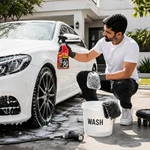
How to Wash a Ceramic Coated Car
Wash the Vehicle in Shade
Avoid starting with extremely hot panels. A
cooler surface gives you more control over the wash and rinse process.
Rinse Loose Dirt
Remove loose dust and contamination before
contact washing. Pay extra attention to lower panels because they normally
collect heavier road dirt.
Use a Clean Wash Mitt
Avoid using an old cloth that may hold dirt
from previous cleaning. Keep the wash media clean throughout the process.
Work From Cleaner Areas to Dirtier Areas
Start higher on the vehicle and leave
heavily contaminated lower sections until later.
Rinse Thoroughly
Do not allow shampoo to dry on the surface.
Rinse each area properly.
Dry the Vehicle
Do not simply leave the coated vehicle to
air dry. A clean microfiber drying towel helps remove remaining water before
spotting develops.
Which Shampoo Should You Use on a Ceramic Coated Car?
This depends on what you are trying to
achieve.
For routine washing, a neutral maintenance
shampoo is usually the simpler approach.
For users who want a wash product with
protection-oriented properties, Maniac Line
Ceramic Shampoo is also available through Detailing Essentials.
It is positioned as a maintenance product for previously applied wax, sealant
or ceramic protection.
This does not mean every wash requires a
ceramic shampoo. Choose according to the condition of the vehicle and the
maintenance goal.
Neutral Foam Shampoo vs Ceramic Shampoo
Neutral Foam Shampoo
Better suited to straightforward routine
cleaning where the main goal is washing the vehicle while respecting existing
protection.
Ceramic Shampoo
A maintenance option for users who want
cleaning combined with protection-oriented characteristics.
Neither should be selected simply because
one sounds stronger. The better option is the one that matches the maintenance
requirement.
Can You Wash a Ceramic Coated Car With Normal Shampoo?
The important question is not whether a
bottle simply says car shampoo. Check what the shampoo is designed to do.
For regular coated-car washing, choose a
product whose instructions and intended use fit the protection already on the
vehicle.
Why Drying Is Important
Many owners focus heavily on shampoo but
ignore drying.
Drying matters because the minerals
contained in water can remain after the water evaporates.
·
Use a clean drying towel
·
Remove water from horizontal
panels
·
Check mirrors and handles
·
Look around badges and trim
·
Watch areas where water
continues dripping after the rest of the car has been dried
This simple step can prevent a common
maintenance problem.
Can Ceramic Coating Get Water Spots?
Yes. A protected surface can still develop
water spots.
Ceramic protection does not mean
mineral-rich water disappears without leaving residue.
If water dries on the vehicle, mineral
contamination may remain behind.
What If Normal Shampoo Does Not Remove the Water Spots?
Do not keep washing the same area
repeatedly and expecting a different result.
If normal washing removes the dirt but a
mineral ring remains, the car may need a mineral-removal process rather than
more routine shampoo.
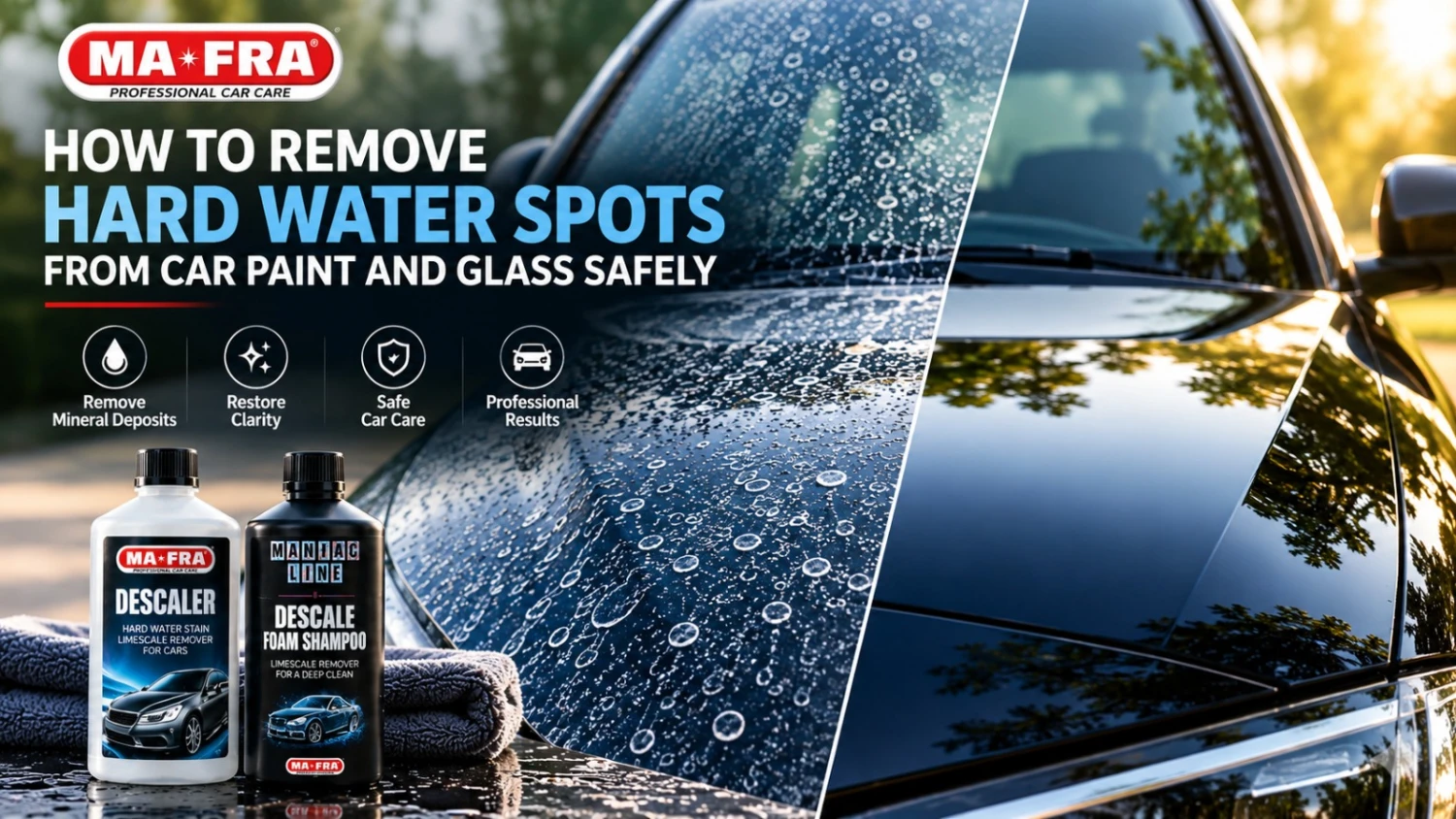
For hard-water contamination, MAFRA Descaler
is one Detailing Essentials option. Always confirm compatibility with the
treated surface and follow the product directions.
When Is Descale Shampoo Useful?
A descaling shampoo has a different role
from an everyday maintenance shampoo.
Maniac Line
Descale 2-in-1 Foam Shampoo is available through Detailing
Essentials for limescale, hard-water residue and mineral buildup.
Think of your wash products according to
the job: routine dirt requires routine cleaning, while mineral buildup requires
mineral-focused cleaning.
What Should You Avoid on a Ceramic Coated Car?
·
Using dirty washing cloths
·
Letting shampoo dry on hot
paint
·
Allowing hard water to dry
naturally
·
Ignoring bird droppings for
long periods
·
Using strong cleaners without
checking compatibility
·
Rubbing stubborn contamination
aggressively
·
Using polishing products when
the problem is only surface contamination
·
Assuming the coating makes
washing unnecessary
What About Daily Dusting?
A light layer of dust can be tempting to
wipe away quickly.
But touching dry dusty paint creates
unnecessary contact between contamination and the surface. If the vehicle has
enough dust to require cleaning, a proper maintenance process is generally a
better approach than repeatedly rubbing the dry surface.
How Should You Handle Bird Droppings?
Bird droppings should not be left sitting
on the vehicle longer than necessary.
Avoid rubbing dried contamination across
the paint. Soften and remove it carefully using an appropriate
automotive-cleaning process.
Ceramic Coating Maintenance During Monsoon
·
Mud
·
Dirty rainwater
·
Road film
·
Splash contamination
·
Moisture around panel gaps
Rain is not a proper car wash. Inspect
lower panels and areas behind the wheels where contamination collects quickly.
Wash when necessary and dry the car properly afterward.
Ceramic Coating Maintenance During Hot Weather
·
Wash in shade
·
Avoid very hot panels
·
Work in manageable sections
·
Rinse products before they dry
·
Dry the vehicle after the final
rinse
A Simple Ceramic Coating Maintenance Routine
Regular Wash
·
Inspect the car
·
Rinse loose contamination
·
Use an appropriate maintenance
shampoo
·
Wash carefully
·
Rinse thoroughly
·
Dry completely
When Water Spots Appear
Wash normally first. Inspect what remains.
If mineral deposits remain, use a suitable mineral-removal process according to
product instructions.
When the Surface Feels Rough
Do not immediately start polishing. The
vehicle may have bonded contamination that requires inspection or
decontamination.
When Protection Seems Weaker
Clean the vehicle properly first. Contamination
can affect how the surface behaves. If performance still appears reduced after
proper cleaning, have the coating assessed.
Mafra Products That Fit a Coating Maintenance Routine
A maintenance routine does not need every
product in the range. Choose according to the job.
For routine cleaning, use Neutral Foam
Shampoo.
For a protection-oriented maintenance wash,
consider Ceramic Shampoo.
For mineral buildup or hard-water
contamination, a descaling
product may be more appropriate when its instructions match the
problem.
You can also browse the wider Mafra car care
range on Detailing Essentials for related maintenance products.
When Should a Professional Detailer Check the Coating?
·
The coating no longer behaves
normally after proper cleaning
·
Heavy mineral contamination is
present
·
Paint defects have appeared
·
The vehicle needs machine polishing
·
You are uncertain whether a
chemical is compatible
·
Large sections of the vehicle
require correction
Frequently Asked Questions
How often should I wash a ceramic coated car?
Wash according to use, storage and
contamination rather than following one fixed schedule.
Can I use a pressure washer on a ceramic coated car?
Pressure washing is commonly used as part
of automotive washing, but always use the equipment correctly and follow both
the vehicle and equipment instructions.
Does ceramic coating prevent water spots?
No. Mineral-rich water can still leave
deposits when droplets dry on the surface.
Which shampoo is good for ceramic coating maintenance?
Choose a shampoo intended for maintenance
washing and compatible with existing protection. A neutral maintenance shampoo
is a practical choice for regular washing.
What is ceramic shampoo used for?
A ceramic shampoo combines cleaning with
protection-oriented characteristics and can be used when that maintenance goal
matches the vehicle.
Should I use ceramic shampoo every time?
Not necessarily. Routine cleaning can be
performed with an appropriate maintenance shampoo.
Why does my coating look less hydrophobic than before?
Surface contamination can affect behaviour.
Start with a proper wash before assuming that the coating has failed.
Can hard water affect a ceramic coated car?
Yes. Hard-water minerals can remain on the
coated surface after water dries.
Final Thoughts
Ceramic coating maintenance is mainly about
good washing habits.
Remove loose contamination first, use the
right maintenance shampoo, wash with clean tools, rinse properly and dry the
vehicle instead of allowing hard water to evaporate naturally.
When a specific problem appears, choose a
product designed for that problem rather than using stronger chemicals without
a reason.
Recent Posts

DIY Car Detailing Guide Using Mafra Products

Professional Car Care Products and Detailing Solutions